





A cancelled family visit: explain what changes and what stays
Explain a cancelled visit clearly: what changes, what stays and what you do not know yet. Practical examples without an unconfirmed promise.
 Nina Bakalová1 November 2026 · 5 min read

When a planned visit is cancelled, explain what has changed, what you do not know yet and which parts of the day still stand. Avoid inventing a replacement date that nobody has agreed. A child can need time for a question and for disappointment. An alternative activity does not have to feel equally welcome straight away.
This article considers one everyday event: someone was going to visit and now cannot come. It is not a treatment guide for anxiety or an explanation of every difficult response. Autistic children can respond differently to changes. Start with the communication and individual support that already work for your child.
Confirm what the message means
Before explaining the change, separate information from guesses. Is the visit cancelled or simply delayed? Could it still happen today? If another adult has only written “running late,” it can be useful to clarify what they mean before passing on an interpretation.
This may spare you from giving a new version every ten minutes. You do not need every answer before saying anything, though. “She isn't coming today. We haven't agreed another day yet” is honest. There is still uncertainty, but it no longer looks like waiting by the door for someone who will not arrive.
Identify the particular change
“Everything is different now” can accidentally remove parts of the plan that remain possible. If dinner at home and the evening story are unchanged, say so. Only offer that reassurance when it is true. Do not preserve a schedule on paper when you already know you cannot follow it.
The National Autistic Society discusses clear visual information about an unexpected change and reassurance about the rest of the routine when it remains the same. These are possible supports, not a guarantee of a particular response.
For a family already using a picture schedule, the change can be represented there. If you do not use one, a difficult moment is not necessarily the time to introduce an unfamiliar system. Use a form of information your child understands. Our introduction to AAC explains the broader idea of communication beyond speech. Follow the methods agreed for your child.
Avoid offering ten replacements at once
It is understandable to want to repair disappointment quickly. You might offer the playground, baking, a film, a shop and a call. The original change has then become several new decisions. As a practical editorial suggestion, try giving the news first and offering one or two realistic options afterwards.
An option needs to be available. Say “we could have a call” only when the other person has agreed to it. Otherwise you may create a second disappointment. “You don't have to choose right now” can also be useful when there is no immediate decision to make.
An invented example: an aunt cannot come
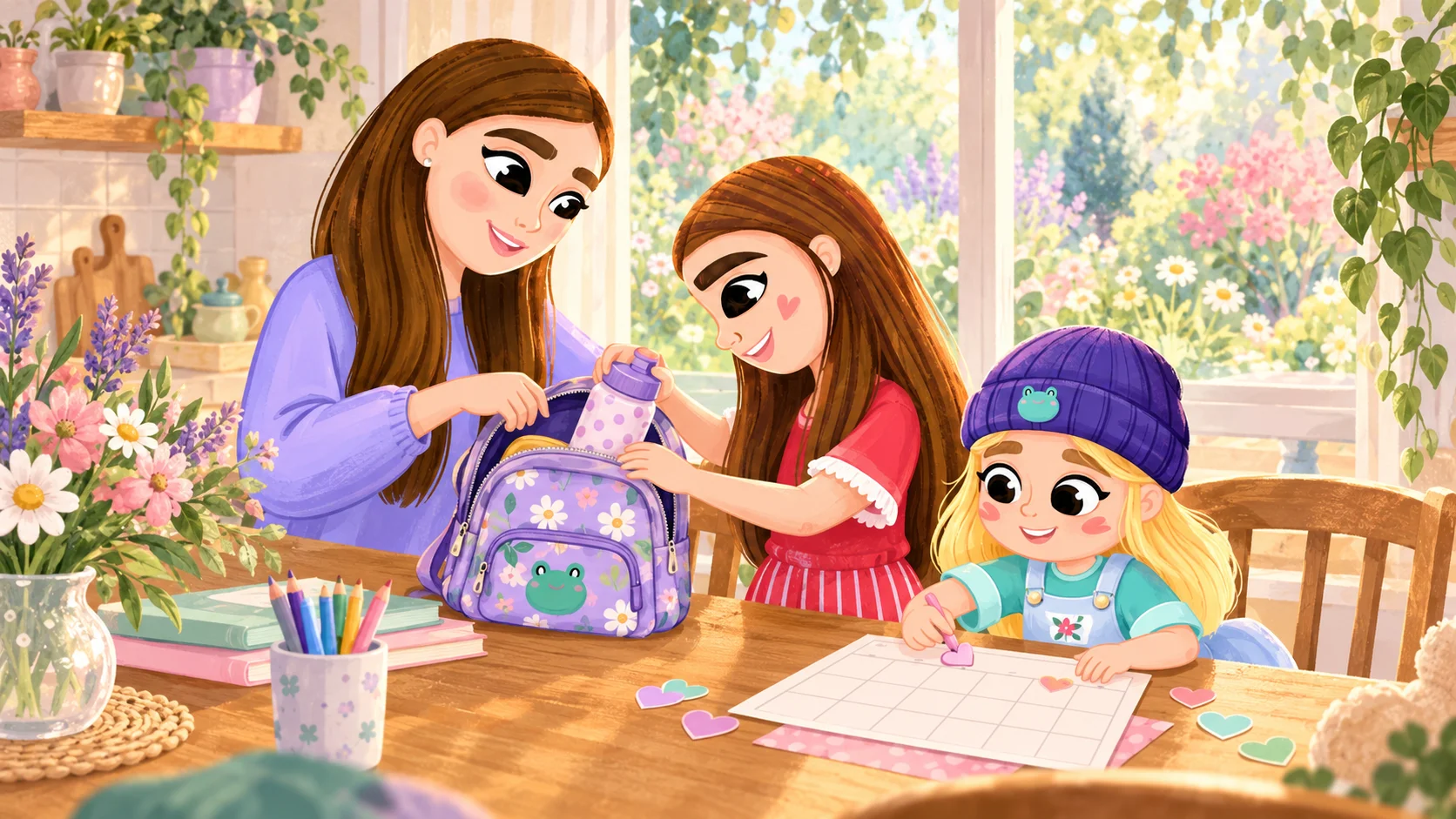
Imagine an aunt who was going to join the family for drawing but cancels her visit. A parent explains that she will not come today. Paper and pencils can stay ready if the child wants them there. Another date will be discussed later.
The child asks again. Instead of producing a longer and different explanation each time, the parent returns to the same accurate information. They might ask whether the drawing should be saved for the aunt or kept at home. Both answers are acceptable. Drawing does not have to begin immediately, and putting the paper away is not a failure.
This example illustrates how a conversation might be organised. It is not a recorded family experience or a method proven to work for every child. Use individual communication supports according to the arrangements you already have.
A sibling is not the replacement activity
More than one child may be disappointed. An older sibling does not automatically become responsible for entertaining a younger child. They may also have wanted the visitor's company or made their own plans.
An adult might say: “Something changed for each of us. Let's work out what needs doing, then what we'd like to do.” This does not require the same answer from everyone. If the cancellation also changes practical arrangements, a specific request for family help, such as collecting another child, can address the actual task.
Answering “when, then?” without inventing a date
You can identify when you will seek more information instead of promising an unconfirmed visit. “She'll come on Saturday” is different from “I'll message her this evening and tell you whether we've agreed a day.” Promise an action you can take. You cannot promise an immediate reply from somebody else.
Coram Family Lives emphasises communicating changes and acknowledging feelings. Raising Children Network distinguishes preparation for expected and unexpected changes. These sources support taking the experience seriously, rather than treating disappointment as evidence of disobedience.
A story can wait until later
Talking about feelings need not happen during the cancellation itself. If you share books at home, you do not have to produce one as an immediate solution. Later, it can offer a conversation without a required correct answer.
Explore our own story on the TAMITOS book page. It is not a clinical intervention or something a family must buy to handle changes. For a separate conversation about different needs, see our guide to explaining autism to children.
Common questions
Should I wait until the visit was meant to start?
If you already know about the cancellation, do not hide it simply to postpone a response. Adapt the timing to your child's communication and agreed support.
Must I immediately find something better?
No. Accurate information and room for a response come first. A replacement is not a competition to deliver a more exciting experience.
What if changes cause frequent, substantial distress?
Discuss concrete examples with a professional who understands your child's needs. This article cannot replace individual support.
Sources checked on 28 October 2026. The family and suggested sentences are invented editorial examples.
Mom of two and co-founder of TAMITOS. For several years I have walked alongside our daughter on the autism spectrum, sharing real experiences from everyday life to bring more understanding and practical information to parents and everyone around them.
More articles

What is a storyboard? One finished picture is not a finished cartoon
A storyboard is a visual plan of shots. It shows what we will see, in which order and how one moment connects …

A children's book for the waiting room: choose one you can pause
A useful waiting-room book is one you can hold comfortably and close halfway through a page. Finishing the sto…
Asking family for practical help: one clear arrangement
A kind offer still needs an arrangement. Agree on one practical task, its timing and confirmation without maki…
 Free