


What is a storyboard? One finished picture is not a finished cartoon
Understand storyboards, illustration, animatics and finished animation through an invented example. A working image does not establish a release date.
 Nina Bakalová1 November 2026 · 5 min read

A storyboard is a visual plan of shots. It shows what we will see, in which order and how one moment connects to the next. An attractive character illustration can introduce an appearance. On its own, it cannot explain what the character did earlier, what they notice or why their next response makes sense.
An illustration on the website of a developing series is not necessarily a frame from a completed episode. You do not need to work in animation to find that distinction useful. It helps separate an introduction to a story world, a working proposal and finished animation without treating every new image as evidence of an approaching premiere.
The script describes; the storyboard makes it visible
A script can describe an event in words. Turning that event into pictures requires decisions about what will be visible and where the viewer will seem to stand. A close view of a hand can communicate something different from a wide view of the room, even when both belong to the same action.
ScreenSkills describes storyboard artists translating a script and a director's vision into panels that plan shots and their continuity. A board therefore needs more than the moments that would make an attractive poster. It must also communicate the connection that lets the next moment make sense.
An invented example with a ball
Consider a simple exercise that belongs to no TAMITOS episode. A ball rests on a table with a box nearby. Someone nudges the ball. It rolls towards the edge. A person catches it before it falls.
If we see only the beginning and the catch, we might know where the ball ended up without understanding the intervention. Showing it approach the edge gives the catch a reason. A beautifully painted table is unnecessary for that explanation. A readable sequence is what matters.
Try covering one panel in this imaginary exercise. What becomes unclear? Have you removed a decorative view or information needed to understand the next action? This is an original editorial example for explaining the term, not a production instruction for a specific show.
What the character knows and what the viewer has seen
We receive information through looks and shot order, often without noticing. A viewer might see an object before the character does. Alternatively, we might see the character react and only then discover what they are looking at.
Either can be useful. The choice needs to support the scene's intention. While watching together, you might occasionally notice: “How did we know something had changed?” The answer could be in the image rather than the dialogue. That does not mean turning family viewing into a test or requiring a child to explain every reaction.
A rough drawing can carry important information
A working panel may contain simple shapes, an arrow or a suggestion of an expression. Its job is not to resemble a finished book cover. It gives a team something specific to discuss and revise.
Walt Disney Animation Studios publicly shows the progression from small thumbnails towards clearer drawings. Its description of story work includes emotion, timing and framing. This is an example from another studio's own explanation, not evidence of a TAMITOS partnership or an identical production process.
Even with a simple sketch, a useful question is whether we know where to look. Adding details may not repair unclear action. Sometimes the decoration makes it harder to notice that a necessary step is absent from the sequence.
Storyboard, animatic and finished animation
These labels describe different things. A storyboard plans shots in panels. An animatic can arrange those images into a timed working video to explore rhythm. Finished animation involves further work on movement and the resulting images. The exact forms vary between productions.
One practical comparison is that panels identify the moments we need to see, while a timed version lets viewers notice whether there is enough time to understand an action. Neither, by itself, confirms that the final sound or the entire episode is finished.
The Czech animation education initiative Animánie also explains storyboards as a way for creators to align their understanding of shots. For a viewer, the useful habit is to read the label: a working sketch remains a working sketch even when it already looks impressive.
Reading an update about TAMITOS
On the TAMITOS series page, look at how an image is described. A story-world illustration, a character introduction and a finished episode offer different information. The existence of an illustration does not establish a broadcast date or a platform where the show will be available.
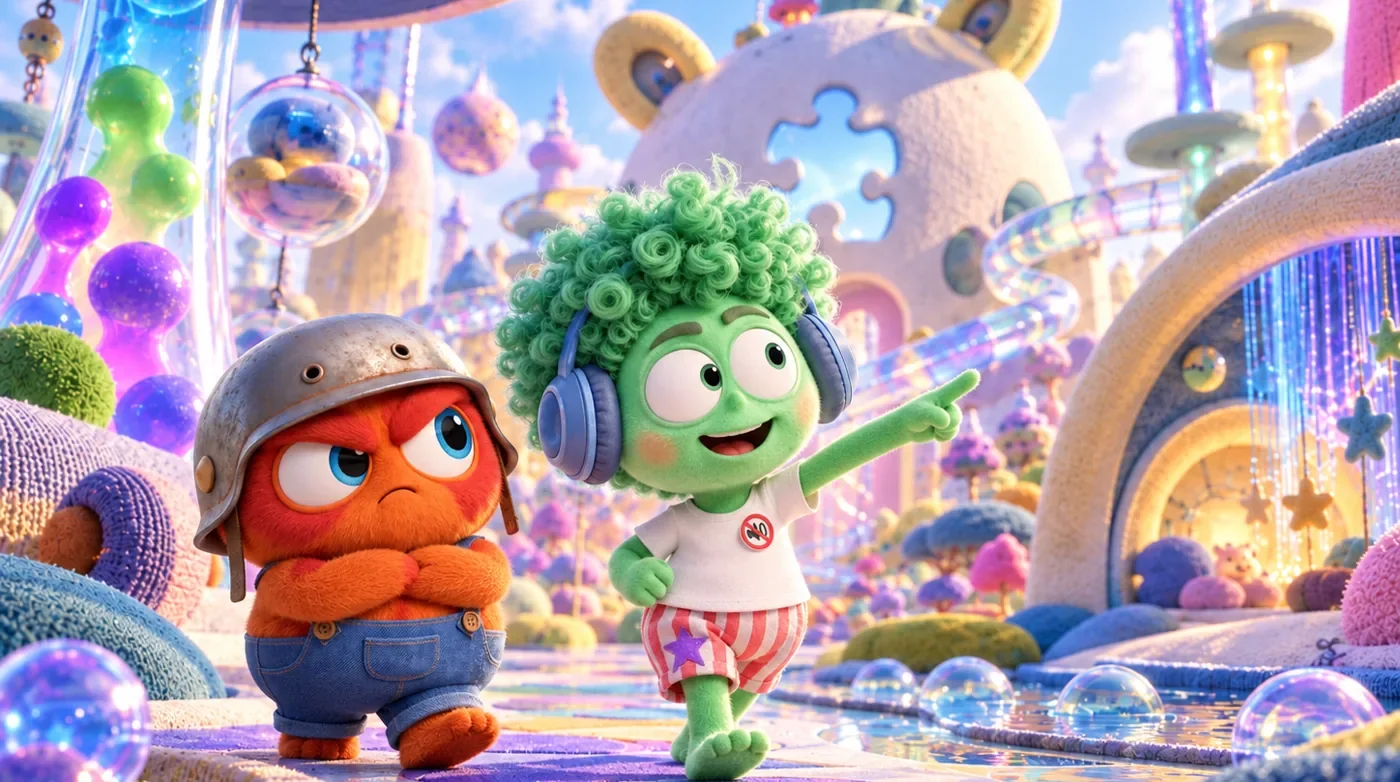
This article does not reveal the internal storyboard of an episode or announce a production milestone. It explains a term you may encounter around animation. Its new main illustration is concept artwork for this blog, rather than a photograph of a production session or a released storyboard panel.
For more context, read how TAMITOS began and our introduction to cartoons about feelings. Follow the TAMITOS website for the project's current public information.
Common questions
Is a storyboard a comic?
It can resemble one, but its working purpose is to plan film shots. It is not necessarily designed to be read as a finished standalone story.
Must it be in colour?
Colour is not necessary to understand its function. Readability and the connection between the pictured moments matter more than a polished finish.
Does a completed storyboard mean the premiere is close?
A storyboard alone cannot establish that. Release timing needs a current public announcement from the creators or distributor.
Sources checked on 28 October 2026. The ball exercise is invented and does not borrow a plot from TAMITOS scripts.
Mom of two and co-founder of TAMITOS. For several years I have walked alongside our daughter on the autism spectrum, sharing real experiences from everyday life to bring more understanding and practical information to parents and everyone around them.
More articles
A cancelled family visit: explain what changes and what stays
When a planned visit is cancelled, explain what has changed, what you do not know yet and which parts of the d…

A children's book for the waiting room: choose one you can pause
A useful waiting-room book is one you can hold comfortably and close halfway through a page. Finishing the sto…
Asking family for practical help: one clear arrangement
A kind offer still needs an arrangement. Agree on one practical task, its timing and confirmation without maki…
 Free