



A children's book for the waiting room: choose one you can pause
Choose a picture book for a short wait: comfortable size, a place to pause and shared pictures without a quiz or a promise of an easy appointment.
 Nina Bakalová1 November 2026 · 5 min read

A useful waiting-room book is one you can hold comfortably and close halfway through a page. Finishing the story is optional. A familiar book can offer something to share; it cannot promise an easy appointment.
Imagine this invented situation. You are sitting beside a door with a bag on your knees. Nobody can tell you exactly how long the wait will be. Your child points at a picture, you read a sentence, and the door opens. That was still a moment with a book, even though you never finished the chapter.
Think about the seat before the story
A large picture book might open beautifully across your kitchen table. On a narrow chair, it may cover your lap and spread into the next person's space. Try holding it while sitting with your bag beside your feet. Can you turn a page without setting everything else on the floor?
Weight matters too. When you are already carrying paperwork, spare clothes and other essentials, one familiar title may be easier than a different book for every possible mood.
Protect the book from leaking drinks and follow the venue's rules about shared objects or toys. Those rules belong to the setting. A general reading article cannot establish the infection-control arrangements for your particular appointment.
Look for a place where you could stop
Open a spread you might share first. Is there a picture your child can explore without hearing a lengthy explanation? Can you point something out without reading the previous ten pages? For an uncertain wait, these questions can be more helpful than the total page count in a shop listing.
If you are considering a new book, use the online preview to inspect the pictures and the amount of text. If a favourite already works for your family, you do not need to buy a special waiting-room title.
Reading Rockets includes taking a book along during waiting time, such as at a doctor's office, among its suggestions for parents of beginning readers. That identifies an opportunity to read. It does not establish that a book will remove worry about an appointment.
Explain why the book might close
Before opening it, you could say: “We can look at the pictures. When they call us, we'll mark our place and go through the door.” This is an example, not a script every child must understand in the same way. Adapt it to the communication you already share. If your child uses pictures or another communication support, the next step can be represented that way too.
Avoid promising a number of pages you might not be able to finish. “Five more pages” sounds precise, but the appointment may start after one. A simple bookmark lets you return without remembering a page number or treating the interruption as the loss of the whole story.
One picture without a quiz
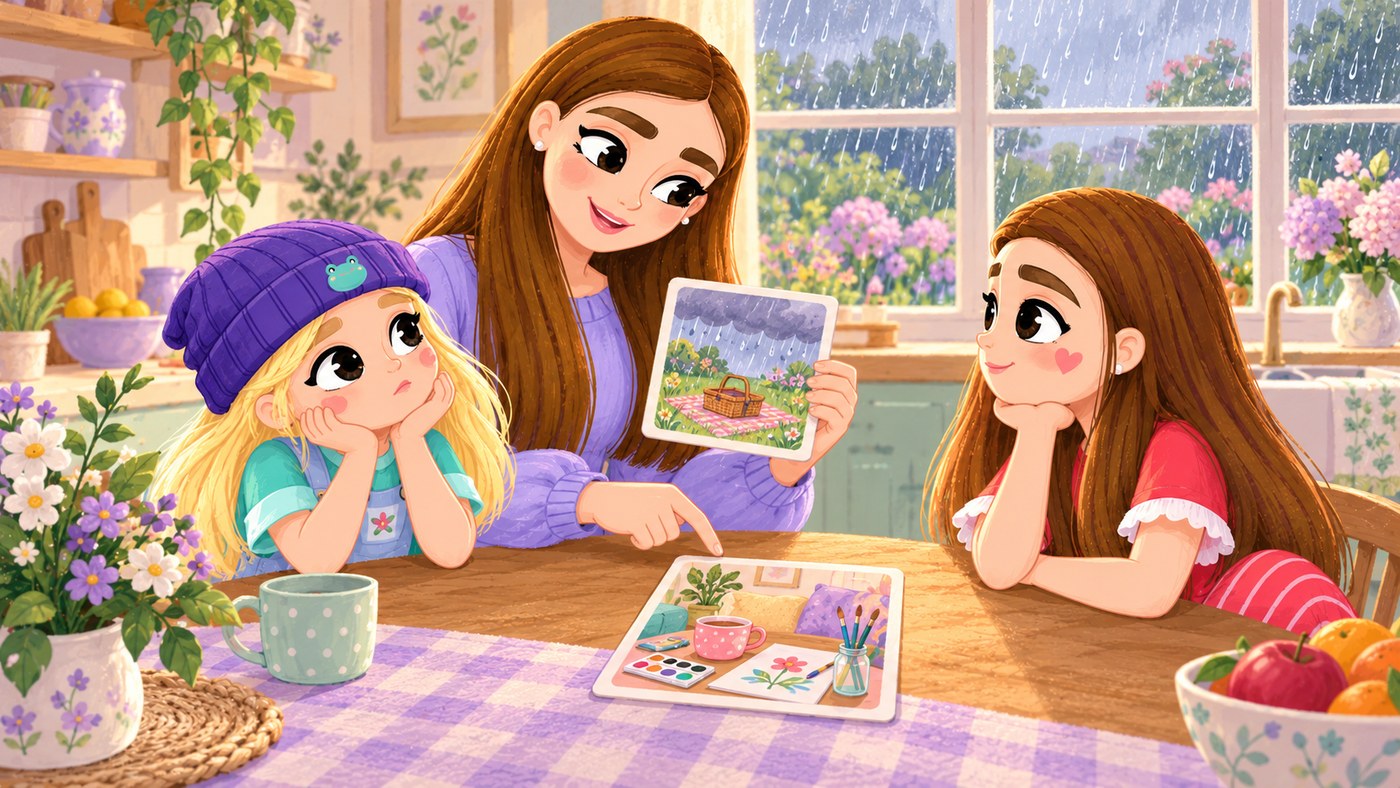
Reading together does not require a stream of questions. You might notice something aloud: “There's an open window.” Your child might point at another detail, turn the page or look away. If questions tend to get in the way, our guide to sharing a book without required answers explores that situation.
BookTrust describes different ways to share stories, including exploring illustrations and following a child's interest. This does not create an obligation to read in every setting. Sometimes the easiest choice is to leave the book closed.
An invented short wait
A parent offers a choice between opening the book and keeping it in the bag. The child chooses a garden picture. Together they notice a flower and a bird. The parent does not ask for correct answers or turn the page simply because they have finished reading the words.
When their name is called, the parent marks the page and says they can return to the garden later. If the child objects, the parent does not turn the moment into a test or restart the entire explanation. They identify the next step and put the book away safely. This is an illustrative arrangement, not a reported family experience or a therapeutic procedure.
When putting it away is the useful choice
You may need to complete a form, listen to instructions or move to another room. The book can close. You can also stop offering it when your child shows no interest. Every minute of a wait does not have to become an activity.
If you have an individual appointment plan agreed with the service or a professional, fit reading around it. A book should not replace information about what will happen next. Avoid reassurance you cannot support, such as promising that nothing uncomfortable will happen when you do not know the procedure.
Where TAMITOS fits
If your child enjoys stories about two sisters, explore the TAMITOS book page. This is our own book, recommended by the TAMITOS brand rather than independently tested as a way to prevent appointment anxiety. Check the actual seller listing for language and format before ordering, and test whether the copy you own suits your bag and seat.
Our home-library suggestions offer other reading ideas. For the waiting room, an already-owned favourite is a perfectly reasonable starting point.
Common questions
Does the book need to be about doctors?
No. Choose according to your child's interest and what you want to share. If you need to explain a particular examination, ask the service about the actual steps rather than treating a generic story as an exact description.
Is a single page worthwhile?
It can be a shared moment around a picture. Reaching the ending is not a condition for opening a book.
What if my child does not want the book?
Put it away. You can offer it another time without describing today's wait as a failed reading session.
Sources checked on 28 October 2026. The situations and suggested wording are editorial examples, not clinical recommendations.
Mom of two and co-founder of TAMITOS. For several years I have walked alongside our daughter on the autism spectrum, sharing real experiences from everyday life to bring more understanding and practical information to parents and everyone around them.
More articles
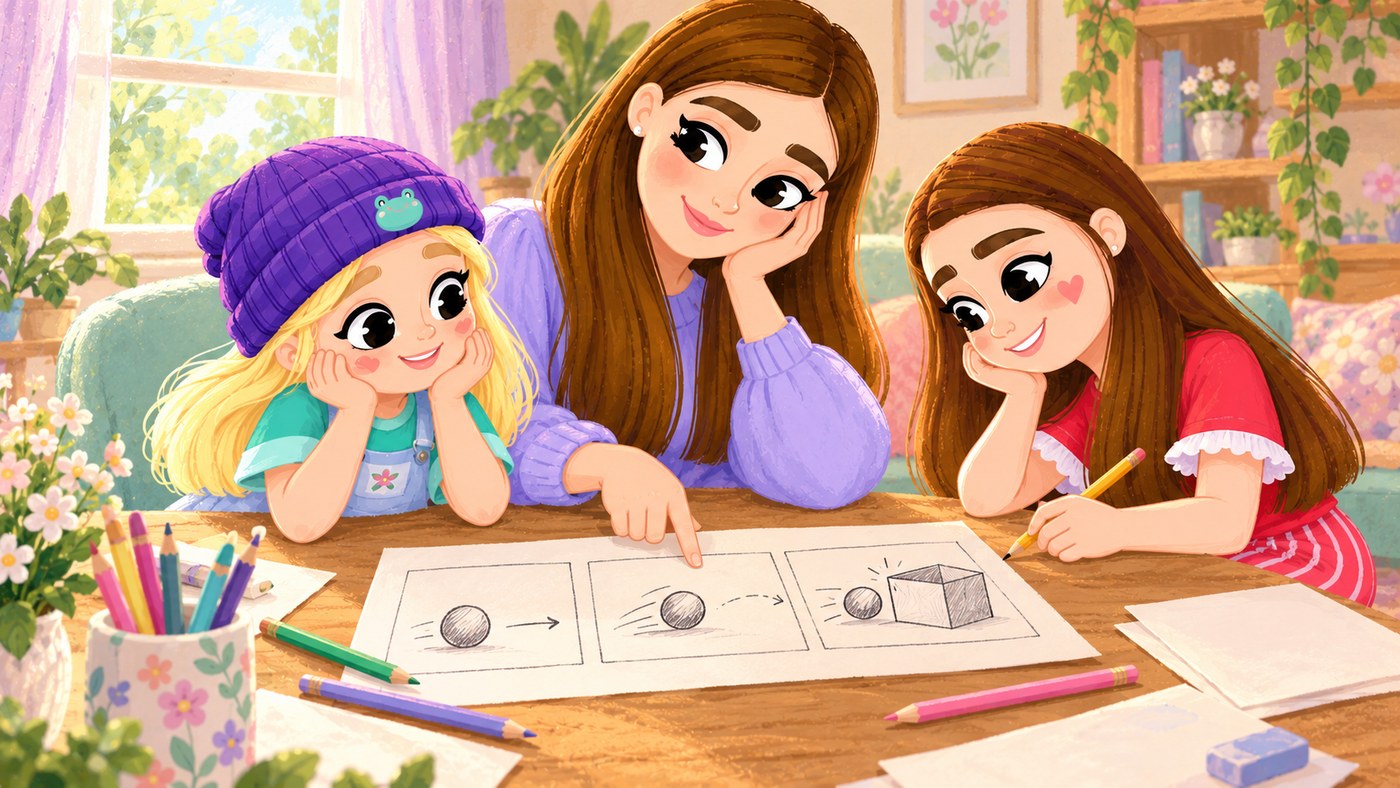
What is a storyboard? One finished picture is not a finished cartoon
A storyboard is a visual plan of shots. It shows what we will see, in which order and how one moment connects …
A cancelled family visit: explain what changes and what stays
When a planned visit is cancelled, explain what has changed, what you do not know yet and which parts of the d…
Asking family for practical help: one clear arrangement
A kind offer still needs an arrangement. Agree on one practical task, its timing and confirmation without maki…
 Free