



When a child does not open a book gift straight away
What to say when a child does not open a book gift straight away. Leave room for their response, manage adult expectations and invite them another time.
 Nina Bakalová24 October 2026 · 5 min read

If a child does not open a book gift immediately, you can leave the invitation open. Tell them the book is theirs and offer to look at it together another time. Put it somewhere agreed with the family. One response at a celebration does not tell you whether a story will become a favourite.
The wrapping is off. An adult has a finger ready at the first page, but the child is busy winding the ribbon around a toy. Someone asks whether they like their present. The child says nothing and goes back to the other gifts.
This imagined example captures a familiar mismatch: the giver has pictured a shared moment, while the child has something else in mind. They do not have to demonstrate enthusiasm on demand.
Give the book a simple introduction
You could say, “This is a story for you. We can look at it together whenever you fancy.” You do not need to explain every reason you chose it or ask the child to turn to your favourite picture.
With TAMITOS, an introduction might be, “It is about two sisters and an adventure.” Our first book explores emotions and difference through an illustrated story. A book about understanding does not need to arrive with a test of how well its recipient behaves.
You can explore the story behind the TAMITOS book before choosing it. This is our own book, which we are recommending openly. Consider the story and illustrations rather than expecting a book to solve a particular difficulty for a child.
For any purchase, check the language and format on the actual seller's listing. An English article or translated title does not establish the production details of the edition you are ordering.
Leave room for a different response
A child might study the back cover, carry the closed book upstairs or put it beside a familiar favourite. There is no need to correct the order in which they approach it. They have not committed to a reading session simply by receiving a present.
A busy room or a wish to keep playing might matter. You do not have to choose an explanation. Scottish Book Trust notes that turning away from a book can mean it is not what a young child wants at that moment. Its guidance discusses responding to children's preferences.
The giver may feel disappointed, too. Choosing something thoughtfully can come with a hope of seeing immediate delight. That feeling does not need to become a reading task for the child.
Help relatives step back gracefully
If you know a grandparent hopes to read the whole book at the party, a quiet conversation beforehand can help. “Let's give it to her and see. She might want to look at it later.”
If the moment is already becoming awkward, a short sentence is often enough to move the conversation on.
“We can keep the book for another time. He wants to stay with the others now.”
“She can show us a picture when she feels like opening it.”
These are suggestions. Use language that sounds like you, without making the child explain their reaction.
Agree where the book can go
Ask the child or their parent where to put it. Perhaps beside the sofa, on the bookshelf or in the bag going home. A visitor does not need to rearrange someone else's reading space or leave instructions about when the present must be used.
Try not to turn the next conversation into an inspection. “Have you finished it yet?” can be replaced with “I'd enjoy looking at it with you sometime, if you want.” A photograph of a child reading is not a receipt the giver needs to collect.
A personal message can stay with the gift for years without setting a deadline. We have separate ideas for a message inside a child's book, including ways to make it warm without assigning the child a role.
Make a second invitation small
A few days later, you might ask, “Would you like your new book, or a different one today?” Be ready for either answer. Offering it again every few minutes would leave little room for a real choice.
If the child chooses the new book, you do not have to finish it. BookTrust suggests following a child's interest when sharing stories, including when they want to stay with a single page. Its reading rhythm ideas offer several ways into a story.
If the book does open and you find yourself asking question after question, our guide to reading with a child who does not want to answer explores that separate moment. Giving a present and sharing its story do not have to happen during the same visit.
Questions about giving a book
Does an unopened book mean I chose badly?
Not necessarily. One reaction cannot settle that question. You can leave the book available and offer to share it later. The child may also prefer a different story.
Should I ask for just one sentence aloud?
Receiving a book does not create a reading assignment. A child who wants to read aloud can do so, but the present still belongs to them if they do not.
Is TAMITOS a treatment or therapy resource?
We present it here as a children's story and an invitation to spend time together. We are not claiming a therapeutic effect or suggesting it replaces professional support.
Are the two TAMITOS books at the same stage?
The first story has been published. The Slovak second book, Príbeh výnimočnosti, is a preorder to be dispatched after printing. Check the exact product, language and current terms before ordering; this article makes no Christmas delivery promise.
You can discover the first TAMITOS story without planning the child's response in advance. The time to open a gift can belong to its recipient, too.
More small family arrangements
For other moments together, explore A café visit with a child: ordering, waiting and leaving and Asking family for practical help: one clear arrangement.
Mom of two and co-founder of TAMITOS. For several years I have walked alongside our daughter on the autism spectrum, sharing real experiences from everyday life to bring more understanding and practical information to parents and everyone around them.
More articles
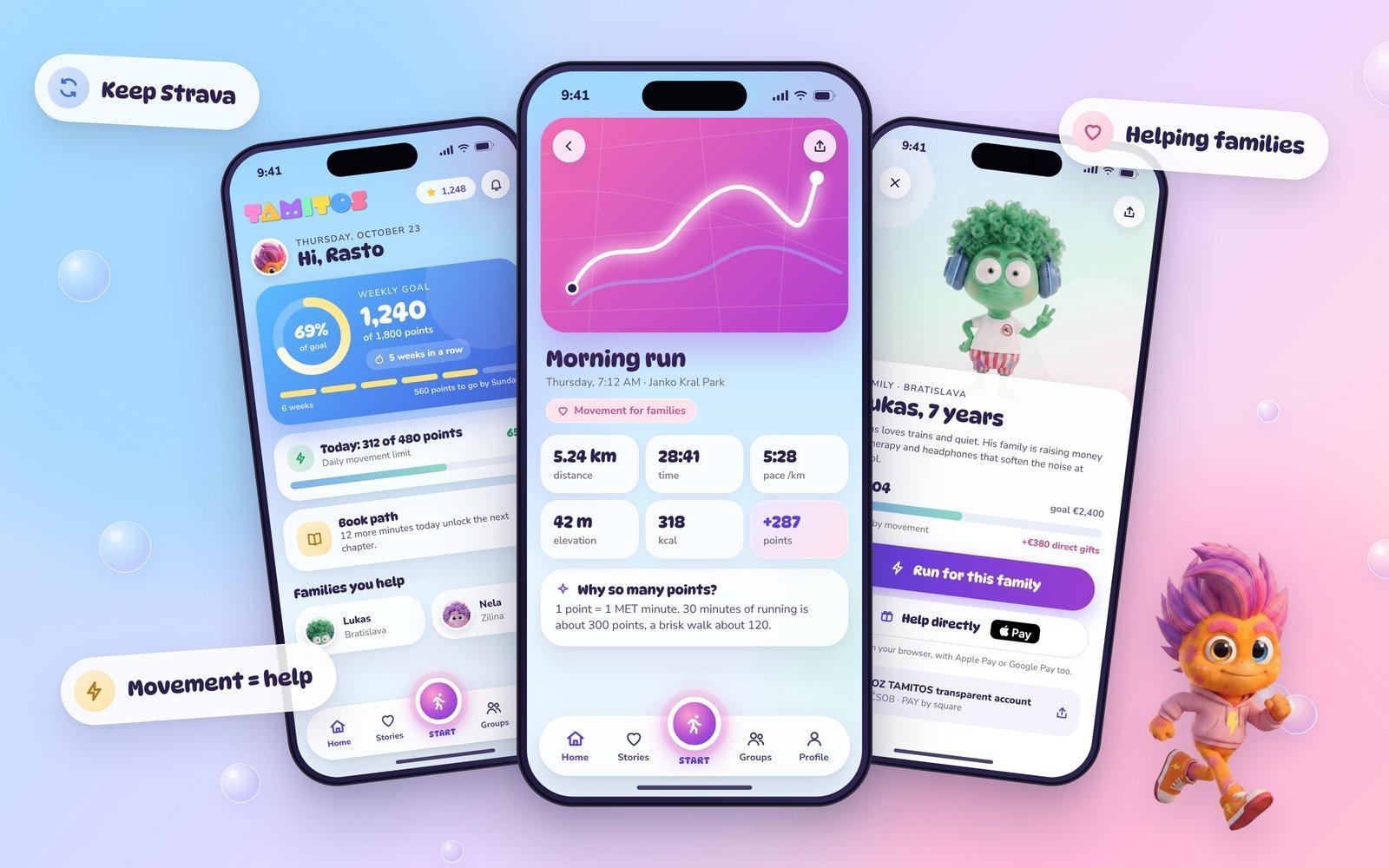
TAMITOS Move vs Strava: why run with an app that helps
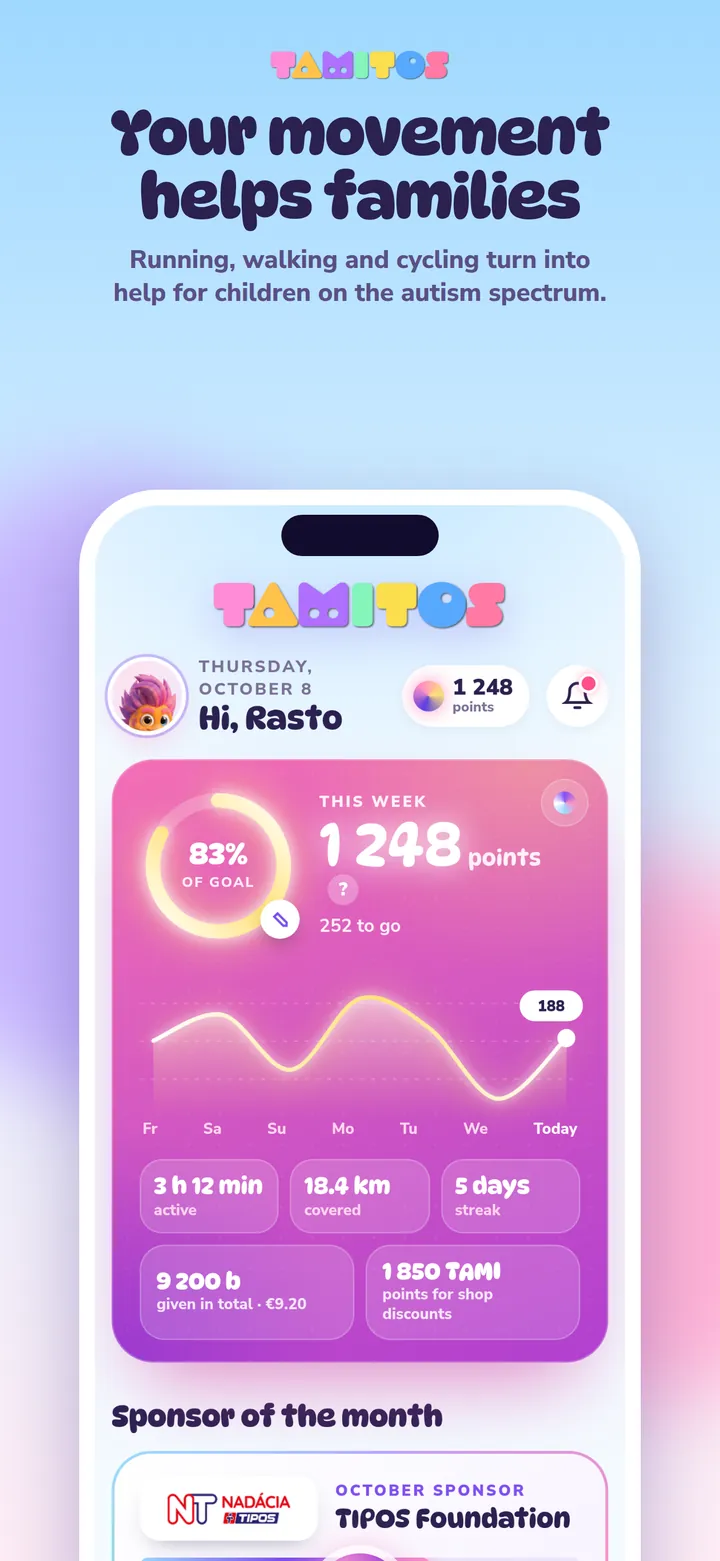
TAMITOS Move is not just a charity app. It records your runs, walks and rides, gives you groups, photos, comme…
Autistic person or person with autism: why asking matters
Both “autistic person” and “person with autism” can belong in a respectful conversation. When referring to a p…
Leaving the playground: agreeing on the end of play
A final turn can mean different things to a parent and a child. Plan the end of playground time with honest ch…
 Free