



What is Foley? Making footsteps and everyday story sounds
Learn how performed sounds follow on-screen action. Explore Foley, dialogue and music through an original quiet exercise with fabric and paper.
 Nina Bakalová5 November 2026 · 5 min read

Foley is the performance and recording of sound details timed to an action on screen. Footsteps, clothing movement and an object being put down can be recorded separately, then combined with the picture. In animation, a footstep does not have to come from the place we see. What matters is what the sound tells us about the movement and when it happens.
One movement, several sound choices
Imagine a drawn character crossing a room and sitting down. The picture shows movement but does not create the sound of a sole, clothing or a chair. The people making the soundtrack can choose which details to add and which to leave quiet. Every visible object does not need its own prominent noise.
With Foley, someone performs a sound: walking on a chosen surface, for example, or moving fabric to match a character's movement. It is more than playing an unrelated recording. The relationship between the gesture, the material and the timing helps a sound feel attached to a particular action.
Scitech's educational activity demonstrates making sounds with everyday objects and performing them alongside animation. The exercise below is our own separate editorial example. It does not describe the sound production of an actual TAMITOS episode.
Foley, dialogue, music and atmosphere
A character's voice, music and sound details serve different purposes. Dialogue can carry the words of a conversation. Music can shape rhythm or mood. Atmosphere can suggest a space even when nobody is moving. Foley focuses on performed details of action, such as a touch, a step or clothing movement.
Production methods can overlap. A film may combine performed sounds, recordings from a library and digitally created effects. Listening alone does not always reveal which object or technique produced a particular noise. A subtle sound is not evidence that it took less work than a loud effect.
The timing of the picture matters too. Our explanation of an animatic looks at the difference between a set of pictures and pictures played for a chosen duration. A sound can match a movement only when we know when the movement happens.
An invented exercise: three steps and a sheet of paper
This is a simple imagined activity to try with an adult, not a preview of the series or a professional recording lesson. You need a clear, safe space, a piece of fabric, a sheet of paper and, optionally, a device for a short recording. Recording is not required. Your first attempt can happen without a screen at all.
Agree a short action: someone takes three calm steps, stops and puts the paper on a table. A watcher notices when each foot meets the floor and when the paper lands. They do not have to copy the performer or appear in a recording themselves. They can simply identify a moment they noticed.
Repeat the movement. A second person might gently move the fabric as the performer's arm moves. Start quietly, with no sudden sound beside anyone's ear. Avoid glass, sharp objects and making a noise louder just to make the activity more exciting. If listening becomes uncomfortable, stop or switch to watching without the added sound.
Timing before loudness
If you record a short attempt, separate two questions: did the sound happen at the right moment, and was it too prominent? Increasing the volume will not fix a timing mismatch. A rustle arriving after the person has stopped can feel detached from the movement even if the sound is pleasant on its own.
For another attempt, change one thing. Move the fabric a little earlier or put the paper down more gently. That makes the difference easier to identify. Instead of saying “wrong”, try describing what happened: “We heard the paper before it reached the table.” This gives information about timing rather than turning the exercise into a test.
There is no need to complete every comparison if a child does not want another replay. Noticing one detail can be the whole activity. You can also compare an action with no added sound against the same action with a quiet sound. Silence is a choice worth noticing, rather than a gap that must always be filled.
People hear the same detail differently
A sound that seems minor to one listener may stand out strongly to another. During a shared activity, check the comfort of the person in front of you. Turning the volume down, stopping or watching without listening should be available without persuasion. This is not an exercise in tolerating an unpleasant noise.
In a finished film or programme, significant sounds may also be conveyed through subtitles for deaf and hard-of-hearing audiences. Our guide to SDH subtitles explains why dialogue alone may not carry all the relevant information. Such subtitles do not automatically describe every tiny sound; the purpose is to communicate what matters for following the work.
Where TAMITOS fits
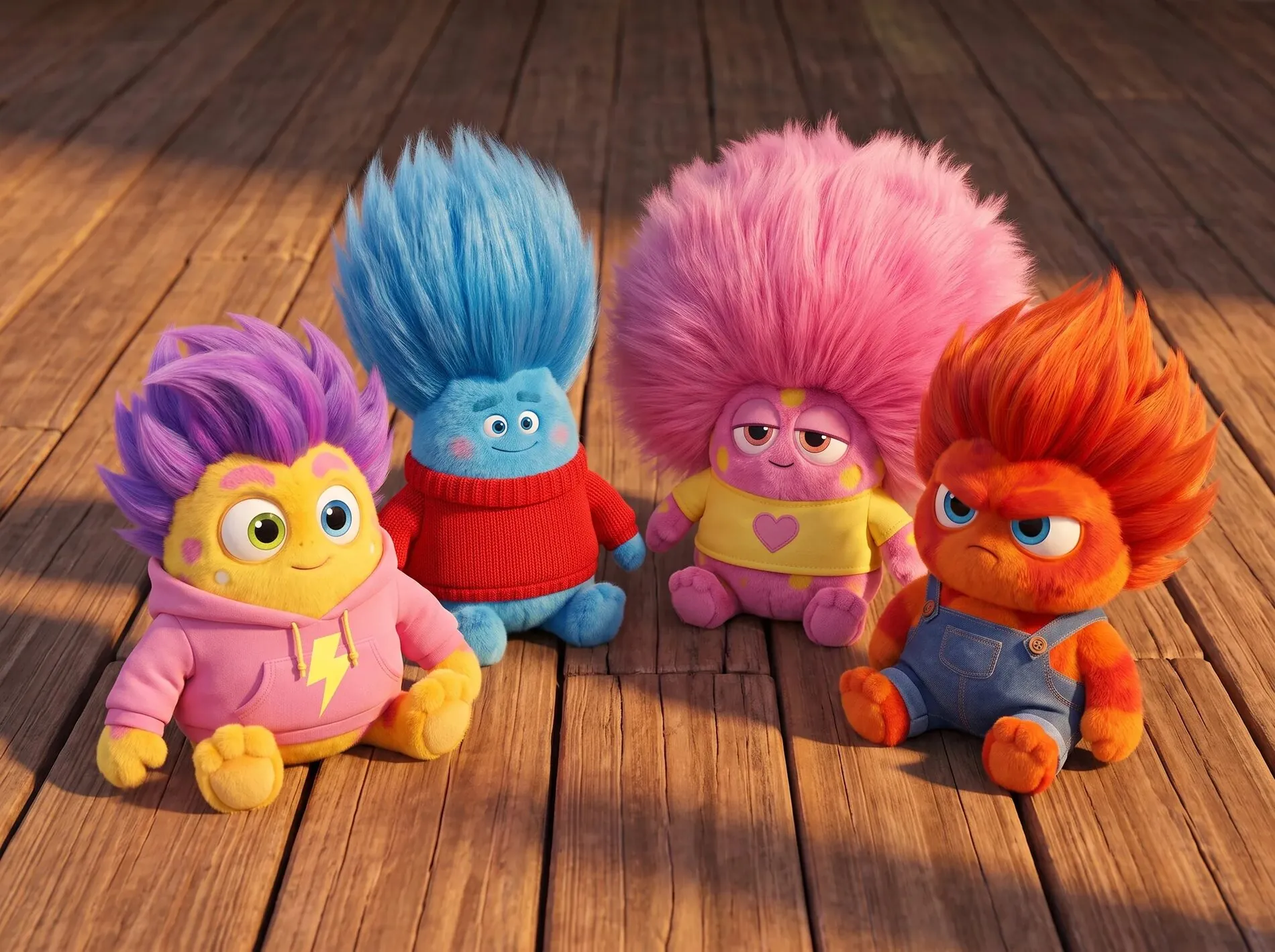
TAMITOS is also developing an animated series, which is in production. This introduction explains a creative method generally. It does not announce finished episodes, a release date or a particular sound-production team. The picture accompanying this article is a concept illustration.
To explore how action is first broken into pictures, continue with our storyboard explanation. These stages address different questions: what we will see, how long it lasts and what we will hear alongside it.
Common questions
Is every film sound Foley?
No. A soundtrack can include voices, music, atmosphere and effects made using other methods. Foley describes a particular way of performing sound details alongside action.
Do we need a microphone and editing software?
Not to explore timing. Start by watching and quietly performing a short movement. Add equipment only if it helps you compare the result rather than becoming the purpose of the activity.
Does everyone have to take part?
No. One person can make a sound, another can watch and someone else can stay outside the activity. A group performance is not required.
Source: Scitech: Foley Sound Effects Challenge, checked 3 November 2026. The home exercise is an original TAMITOS example, not a record of series production.
Mom of two and co-founder of TAMITOS. For several years I have walked alongside our daughter on the autism spectrum, sharing real experiences from everyday life to bring more understanding and practical information to parents and everyone around them.
More articles
A family photo without a forced smile or hug
A family photograph can work without a compulsory smile, a hug or a long sequence of poses. Explain where it w…
Giving a picture book to nursery: agree the purpose first
A picture book for a nursery or preschool is best chosen after a short conversation with the people who will u…
What is an animatic? Storyboard pictures played in time
An animatic is a working sequence in which storyboard pictures play for chosen lengths of time. It may include…
 Free