

What is an animatic? Storyboard pictures played in time
See how an animatic adds duration to storyboard pictures. Try a three-picture leaf exercise and learn why temporary sound is not final animation.
 Nina Bakalová2 November 2026 · 5 min read

An animatic is a working sequence in which storyboard pictures play for chosen lengths of time. It may include speech, music or sound effects. It helps you consider a story's rhythm before the finished animation. A beautiful individual picture cannot tell you how long a shot should last or whether a viewer has time to understand it. A small picture sequence lets you explore those questions.
A storyboard gives you an order; an animatic gives it duration
A storyboard presents planned shots as pictures. On a page, you can study them at your own pace. In a playing sequence, someone has chosen when each picture disappears. That decision changes the experience even when the drawings stay exactly the same.
Adobe's explanation of animation storyboarding describes an animatic as a simple playing version of a storyboard, which can include transitions, dialogue and audio. The word does not mean any finished animated film. We will explore the difference through an original editorial exercise.
This is not an account of a particular TAMITOS episode, the software used to make it or its production status. Explaining a general filmmaking term does not establish that an episode is nearly ready for release.
Three pictures, two different experiences
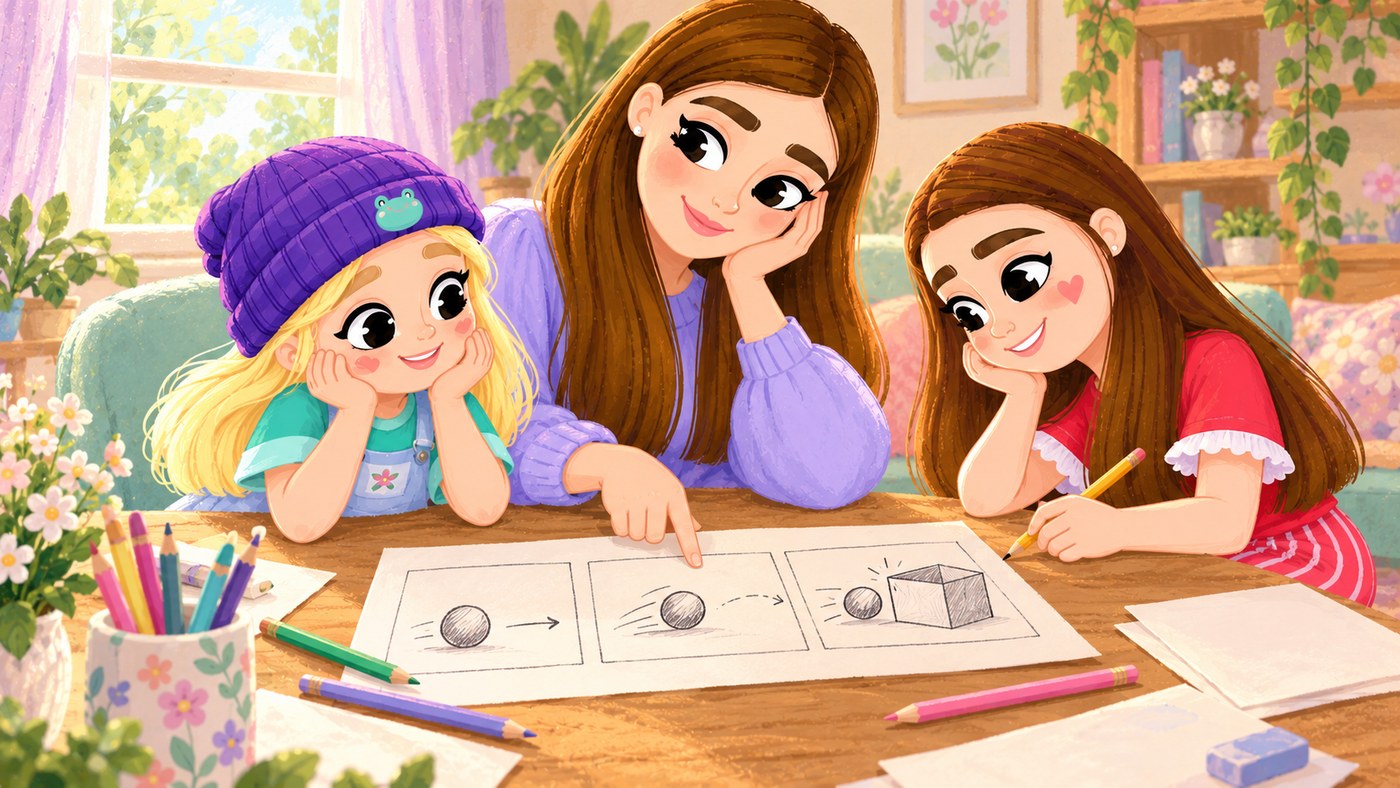
Imagine a tiny sequence with no characters: a leaf hangs from a branch, falls, then lies on a path. Draw three simple panels. In the first, the leaf is still attached. In the second, it is in the air. In the third, it has reached the ground.
For one version, show each picture for roughly two seconds. For another, hold the first longer, show the middle one briefly, then stay with the last picture. These timings belong to our invented exercise. They are not production rules or recommended viewing speeds for all children.
The drawings have not changed, but the waiting has. The second version may create a longer wait before the fall and a quicker change in the middle. Notice your own response. You do not need to identify a universally correct version. Ask what you want someone to notice in this particular little story.
Choose a question before adding polish
It is tempting to improve the leaves, add a textured background or search for music. First ask something smaller: is it clear that all three pictures show the same leaf?
If not, try keeping a recognisable shape or mark on it. Then return to the timing. Holding a confusing picture longer may not explain the connection you intended. You do not have to rebuild the whole idea. A clearer single panel may be enough for the next attempt.
Change one thing in the following version. For example, shorten only the middle picture. If you replace the drawings, music and order together, it becomes harder to explain which change affected your experience.
Our exercise is deliberately modest. It is a way to compare choices, rather than a claim that every production follows one fixed procedure. A professional project may have requirements that a three-picture experiment does not address.
Give a temporary sound a clear job
Try recording a quiet rustle of paper for the imaginary leaf. Play the sequence with and without it. Is the fall understandable in silence? Does the rustle arrive where you expect it? At this point, its purpose can simply be to help you compare two versions.
Label a working voice or sound as temporary when sharing your experiment. Otherwise, someone may assume it is approved final audio. Use your own recording or material you have permission to use. A familiar commercial song is not necessary for this small exercise to make sense.
Sound can carry information as well as atmosphere. In a finished video, important sounds may need a written description. Our explanation of SDH subtitles looks at information beyond spoken dialogue. Adding audio to an animatic does not by itself provide that accessibility feature.
Ask for a reaction you can use
Instead of asking, “Is it nice?”, try, “In which picture did you notice the leaf was falling?” Or ask, “Did anything disappear before you had time to look at it?” Those questions give the next edit a more specific purpose.
A child taking part does not have to answer or become the project's reviewer. They can point to a favourite picture or simply watch. You can compare versions yourself. This is not a test of a child's attention or abilities.
You can also explain what you are trying in ordinary language: “The pictures aren't changing shape yet. We're trying out how long to show each one.” You do not need to repeat the technical term for the activity to be meaningful.
Questions about animatics
Is an animatic a finished cartoon?
In this context it is a working version of a sequence. Seeing one does not establish a release date, finished character animation or approved final sound.
Does it need music?
Our simple duration exercise does not. Begin with the pictures alone. Add sound when there is a particular question you want that sound to help explore.
Is a production note the same as audio description?
No. A spoken note intended for a creator is not automatically audio description for a viewer. Audio description communicates visual information and serves its own purpose.
Where can I find TAMITOS series updates?
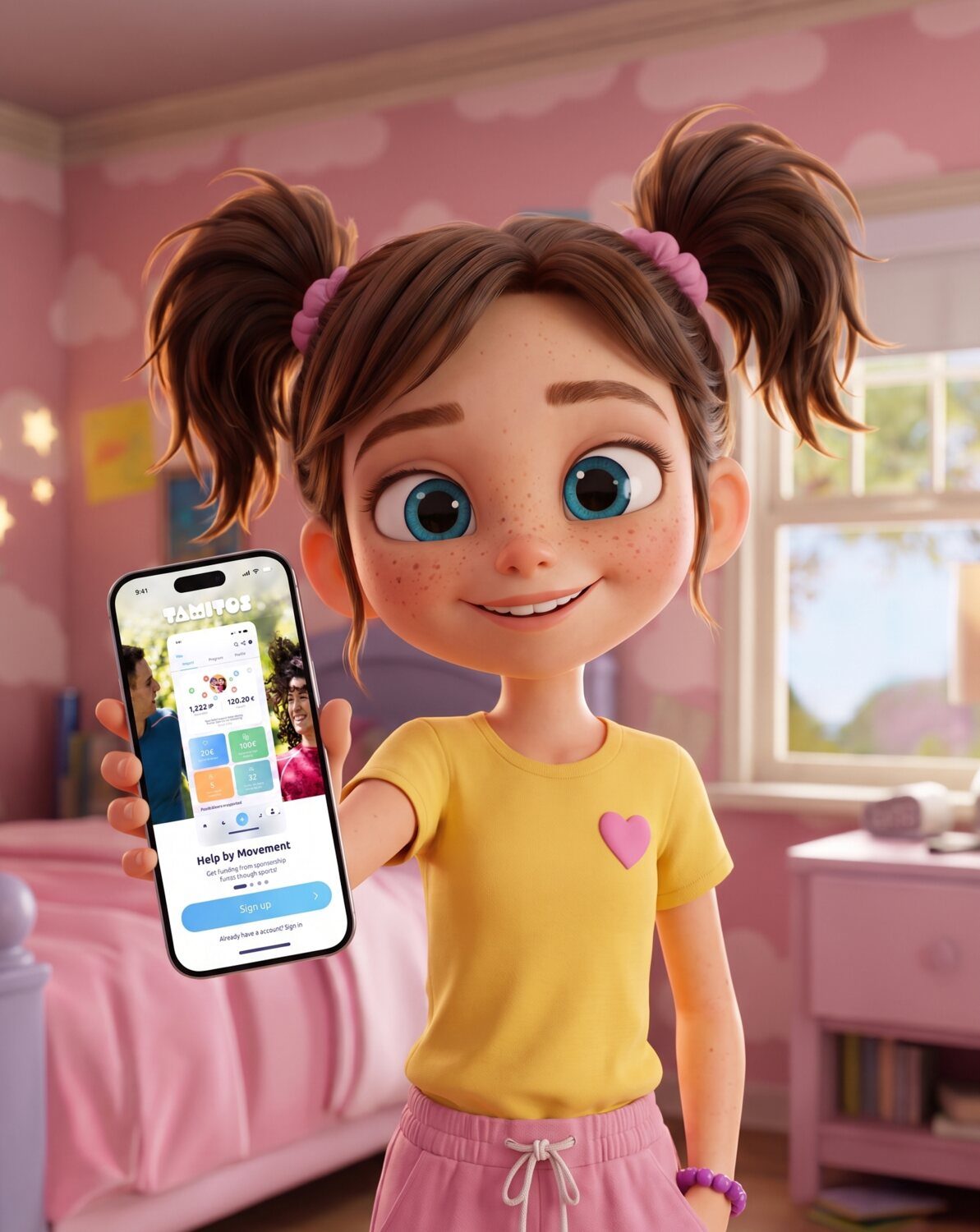
Visit the official TAMITOS animated series page. The series is in production. This article and its concept illustration are not footage from a finished episode or an announcement of a premiere.
Source: Adobe: Animation Storyboarding Explained, its section on animatics, checked 2 November 2026. The leaf exercise, timings and review questions are original TAMITOS editorial examples, not instructions for producing a particular episode.
Mom of two and co-founder of TAMITOS. For several years I have walked alongside our daughter on the autism spectrum, sharing real experiences from everyday life to bring more understanding and practical information to parents and everyone around them.
More articles
A playdate at home: agree which toys are for sharing
Before a playdate at home, agree which toys will be available and which personal things your child wants to pu…
When a child skips picture-book pages: follow their interest
If a child skips several picture-book pages, you do not have to turn straight back to the beginning. You can p…
What is a storyboard? One finished picture is not a finished cartoon
A storyboard is a visual plan of shots. It shows what we will see, in which order and how one moment connects …
 Free