




Personality
Calm, focused and thoughtful, until a new idea arrives and he explodes with excitement. Cleverkin is the inventor of the group, an introvert who is happiest building in his workshop, and everyone comes to him when something needs fixing.
Cleverkin represents intense interests, ADHD hyperfocus and neurodivergent brilliance. He celebrates exactly what makes many autistic children extraordinary, showing that deep passion is a gift, not a flaw.
Cleverkin loves to dive deep into the things they care about, learning every detail. That focus helps Cleverkin learn a lot, though it can be hard to switch away from a favourite topic.
Calm, focused and thoughtful, until a new idea arrives and he explodes with excitement. Cleverkin is the inventor of the group, an introvert who is happiest building in his workshop, and everyone comes to him when something needs fixing.
He struggles to finish projects because each invention sparks five more, loses track of time, and can become obsessed with a single problem. He often feels misunderstood, prefers solitude, and takes failure very personally.
He can build almost anything. When his hyperfocus kicks in he is unstoppable, inventing gadgets and solutions where others only see problems, from Hushlit’s headphones to a little robot that speaks for him.
Brilliant, inventive and hyperfocused, calm until inspiration strikes
Intense interests, ADHD hyperfocus and creative brilliance
Celebrating passions and special interests as real strengths
He loses himself building alone for hours and can talk forever about one idea, learning that finishing something, and letting friends help, feels just as good as inventing it.
The story

I have an idea! Wait... a better idea! No, an even better idea! Done is the enemy of better!
Across the series Cleverkin learns to finish one project from beginning to end, discovering that completing something can be as rewarding as inventing it. In the finale he creates the invention that saves Tamitos World, but only because he finally learns to collaborate and accept help from his friends.
What makes you different may one day become your greatest strength.
For parents and teachers
Deep interests bring joy, comfort and a sense of mastery. For many autistic children, focusing intensely on a topic is calming and motivating, and a genuine strength rather than something to discourage.
Embrace them and use them as a bridge. Interests can build confidence, connection and learning across other areas. Gentle routines help balance focus time with meals, rest and transitions, without dismissing what the child loves.
What you can do right now
 Free
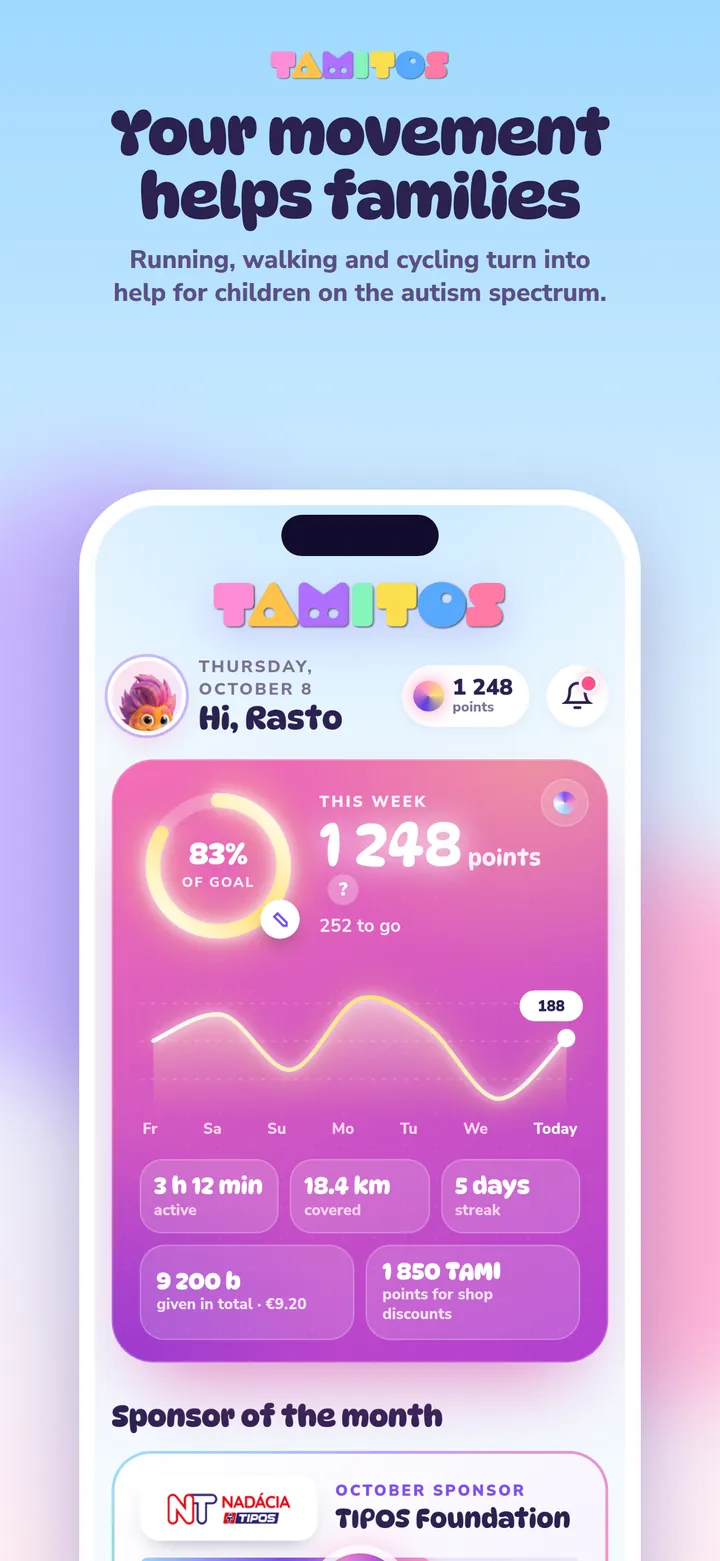
FreeMovement turns into points and points into help for families. Unlock the Tamitos by walking, running and playing outside.
Get the app How does the app work?One account for the app, the shop and the website. Points for moving, shopping and inviting friends, badges for helping.
Sign up free See the perks 16,90 €
A picture book about autism and feelings for bedtime reading. Part of every order goes to families. Slovak edition, English coming.
Buy the book
Your gift goes to the nonprofit OZ TAMITOS and straight to families of autistic children.
One account for the TAMITOS Move app, the shop and the website. Earn points for moving, shopping and inviting a friend, climb the levels and soon swap them for discounts and badges.
We use cookies to learn which articles and products actually help families, and to reach more families. Nothing beyond what the site needs to work runs without your consent. More about cookies
 Grumplet
 Sadlet
 Touchet
 Hushlit
 Mellowlet