




Personality
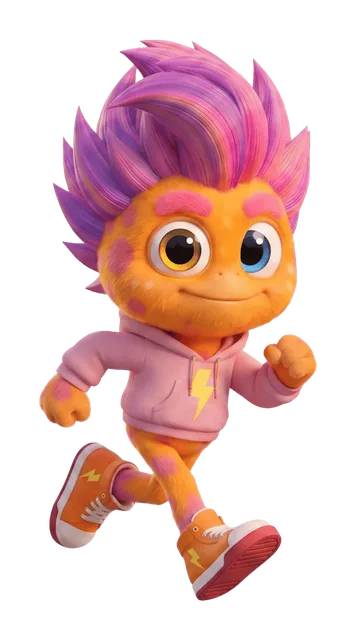
The funniest Tamito and the group’s DJ, Zoomie is first to act, first to speak and usually first into the chaos that follows. He has a million ideas a second, boundless energy and a heart that always rushes in when someone needs help.
Zoomie represents hyperactivity, impulsivity and ADHD, the joy and chaos of a body that constantly needs to move. He helps children see these traits as how some brains work, not as flaws.
Zoomie is full of movement and ideas, buzzing from one thing to the next. Sitting still can feel almost impossible, and big energy sometimes arrives at the wrong moment.
The funniest Tamito and the group’s DJ, Zoomie is first to act, first to speak and usually first into the chaos that follows. He has a million ideas a second, boundless energy and a heart that always rushes in when someone needs help.
He acts before thinking, cannot sit still for long, and talks four sentences at once without finishing any of them. Most of his ideas start with good intentions and end in disaster, and being made to wait is almost impossible for him.
He moves so fast he leaves a bright colourful trail behind him, sees perfectly in the dark, and powers the whole group with energy that never seems to run out.
Funny, fearless and full of unstoppable energy, the group’s DJ
Hyperactivity, impulsivity, ADHD and boundless energy
Channelling energy and learning the power of the three-second pause
He races from idea to idea and is first into every adventure and every bit of trouble, until he learns that a tiny pause helps him listen, plan and help even more.
The story
LET'S GO! LET'S GO! LET'S GO! New idea! Better idea! Best idea! Wait... what was I saying?
Zoomie learns the power of the three-second pause, not to stop being fast and imaginative, but to pause before leaping into action. Over time he discovers that slowing down for a moment doesn't make him less himself; it helps him listen, plan and help others, and in the finale that tiny pause is what saves the whole group.
A busy, fast-moving brain isn't broken. With the right tools, that energy becomes a gift.
For parents and teachers
Movement often helps autistic children regulate and think. What looks like restlessness or distraction can be the body’s way of managing sensory input and staying calm. Focus tends to follow interest, not force.
Build in movement instead of fighting it. Regular active breaks, fidget tools, short clear tasks and following the child’s interests all support focus. Predictable outlets for energy make calm moments easier for everyone.
What you can do right now
 Free
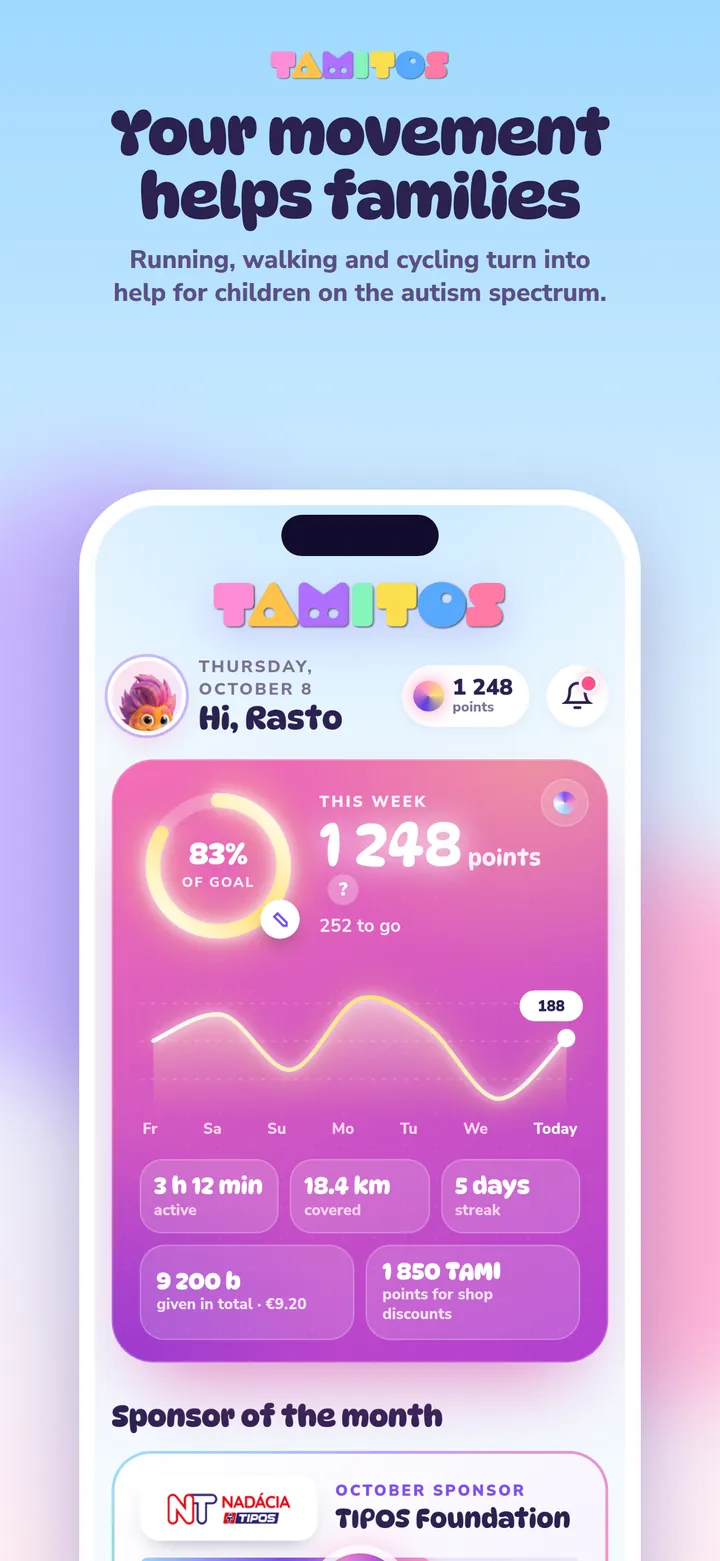
FreeMovement turns into points and points into help for families. Unlock the Tamitos by walking, running and playing outside.
Get the app How does the app work?One account for the app, the shop and the website. Points for moving, shopping and inviting friends, badges for helping.
Sign up free See the perks 16,90 €
A picture book about autism and feelings for bedtime reading. Part of every order goes to families. Slovak edition, English coming.
Buy the bookYour gift goes to the nonprofit OZ TAMITOS and straight to families of autistic children.
One account for the TAMITOS Move app, the shop and the website. Earn points for moving, shopping and inviting a friend, climb the levels and soon swap them for discounts and badges.
We use cookies to learn which articles and products actually help families, and to reach more families. Nothing beyond what the site needs to work runs without your consent. More about cookies
 Grumplet
 Sadlet
 Touchet
 Hushlit
 Mellowlet
 Cleverkin