




Personality
Sadlet is gentle, kind, and deeply empathetic, feeling every emotion, his own and everyone else’s, more intensely than anyone else. He longs to belong and to be truly seen. Even ordinary moments others shrug off can touch him deeply.
Sadlet represents children who feel different, unseen, or disconnected, even when surrounded by others. This Tamito helps children name their feelings and helps parents and teachers understand the quiet side of emotional experience.
Sadlet feels every emotion deeply, his own and everyone else’s. Even ordinary moments others shrug off can touch him, and sometimes he feels unseen even in a crowd.
Sadlet is gentle, kind, and deeply empathetic, feeling every emotion, his own and everyone else’s, more intensely than anyone else. He longs to belong and to be truly seen. Even ordinary moments others shrug off can touch him deeply.
He’s afraid of rejection, so he withdraws instead of asking for help. Small moments hit harder than anyone realizes, and sweets often become his comfort instead of words.
Every tear Sadlet cries blooms into a flower. The sadder he is, the more flowers appear, and when he cries hard enough, the whole village turns into a garden.
Gentle, observant, quiet, emotionally sensitive
Loneliness in children, social isolation, feeling unseen
Helping children express emotions and seek connection
Sadlet often stays quiet and watches from a distance. He feels deeply but speaks softly. He reminds us that silence does not mean absence of feelings.
The story

I'm sad. And that's okay. Caring is what makes it hurt.
Sadlet gradually learns to share his sadness instead of drowning in it. His defining moment comes when he says for the first time, “I'm sad and I don't know why,” and the others answer, “We're here.”
Wanting connection is not weakness. Feelings shared are feelings that get lighter.
For parents and teachers
Many autistic children feel emotions intensely and connect differently, which can feel isolating. Difficulty reading social cues or being misunderstood can leave a child feeling on the outside, even when they long for connection.
Meet them in their world first, then gently build bridges. Follow their interests, offer low-pressure ways to share feelings, and value the quiet moments without rushing them. Small, consistent connection matters more than big gestures.
What you can do right now
 Free
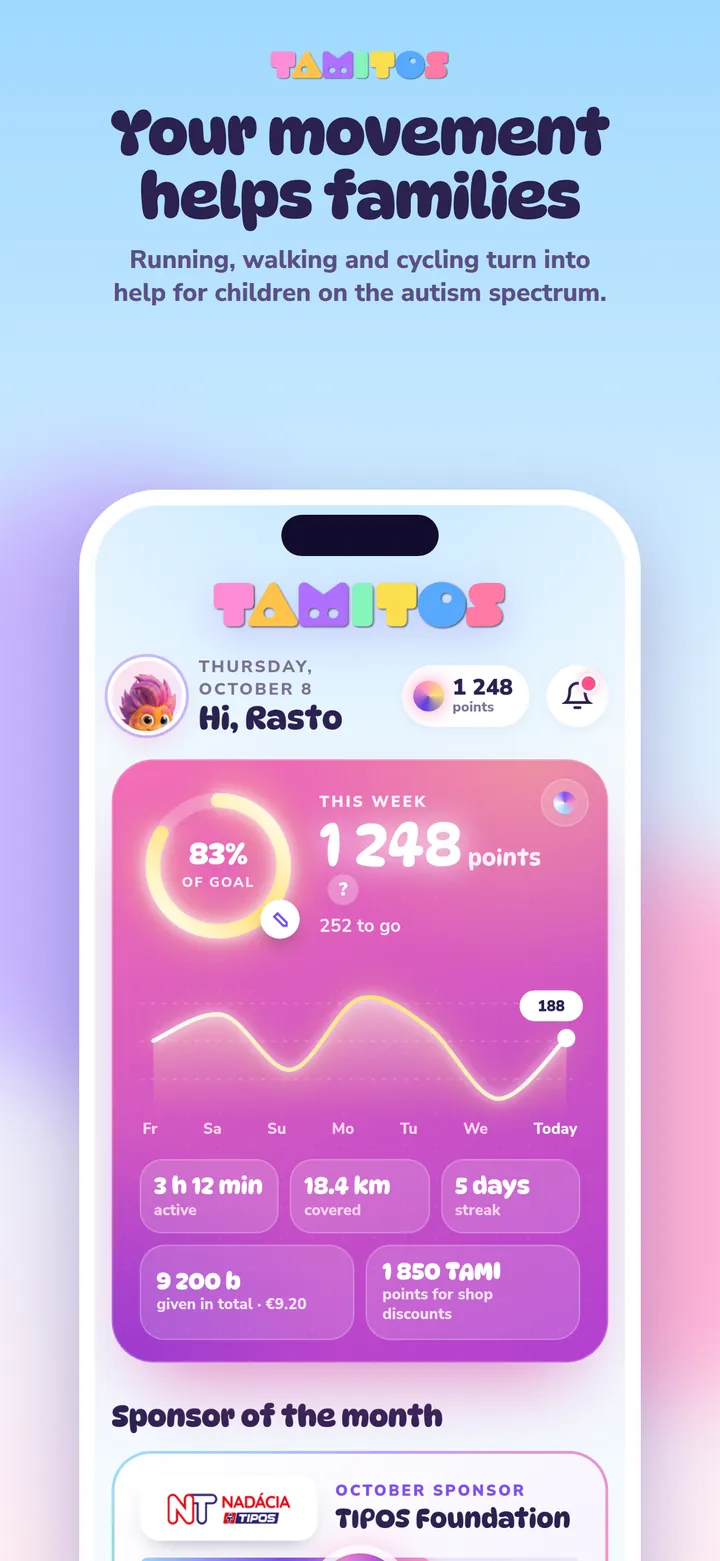
FreeMovement turns into points and points into help for families. Unlock the Tamitos by walking, running and playing outside.
Get the app How does the app work?One account for the app, the shop and the website. Points for moving, shopping and inviting friends, badges for helping.
Sign up free See the perks 16,90 €
A picture book about autism and feelings for bedtime reading. Part of every order goes to families. Slovak edition, English coming.
Buy the book
Your gift goes to the nonprofit OZ TAMITOS and straight to families of autistic children.
One account for the TAMITOS Move app, the shop and the website. Earn points for moving, shopping and inviting a friend, climb the levels and soon swap them for discounts and badges.
We use cookies to learn which articles and products actually help families, and to reach more families. Nothing beyond what the site needs to work runs without your consent. More about cookies
 Grumplet
 Touchet
 Hushlit
 Mellowlet
 Cleverkin