Hushlit
"Some sounds feel too loud for my ears."
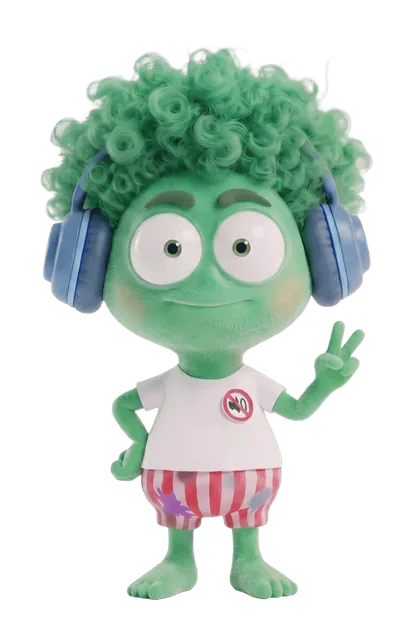
Hushlit represents children who experience sounds more intensely than others.
For Tamito, sounds can feel bigger than life. What's just everyday background Hushlit for others can be overwhelming for him — a passing truck, a ticking clock, too many voices at once. Sometimes, the ordinary world is simply too loud. When that happens, Tamito retreats into his own safe space, finding the quiet that helps him breathe again. In that silence, he can recharge, think clearly, and feel safe.
Hushlit
Traits
What makes Hushlit special
alert, sensitive, cautious
Represents
What Hushlit represents
Sound sensitivity, auditory overload, Hushlit discomfort
Ability
What Hushlit helps with
Helps children communicate sound-related discomfort
Behaviour
How Hushlit behaves
Hushlit reacts quickly to sudden sounds and seeks calm environments where ears can rest.
How Hushlit helps parents and children talk about sound sensitivity
Hushlit is a character who experiences the world exactly as many auditory-sensitive children do — sounds arrive bigger, louder, and harder to filter.

Because Hushlit is a character and not the child themselves, it creates a safe distance for conversation. A child who cannot yet say “the Hushlit at school is too much for me” may find it much easier to say “Hushlit doesn’t like the cafeteria.” Parents can use the character to open gentle conversations about which sounds feel difficult, what helps, and what the child needs when they are overwhelmed — turning a frustrating behaviour into a shared language.
Common questions about sound sensitivity in autism
What causes sound sensitivity in autistic children?
Sound sensitivity in autistic children is caused by differences in how the brain processes sensory input.
The auditory cortex in many autistic brains does not filter background Hushlit the way neurotypical brains do, meaning all sounds can arrive at similar intensity. This is sometimes called hyperacusis or auditory hypersensitivity and is a recognised feature of autism spectrum disorder, not a behavioural choice.
How can I help my child with auditory overload?
Start by identifying which specific sounds trigger your child — keeping a simple diary for a week can reveal patterns.
Hushlit-cancelling headphones or ear defenders can help in unavoidable loud environments. Giving advance warning before noisy situations, creating quiet decompression spaces at home, and validating your child’s experience without dismissing it all make a meaningful difference. An occupational therapist with sensory experience can create a personalised sensory diet.


Learn more on our blog
See all articles
See all articles