

When a child skips picture-book pages: follow their interest
Keep reading together when a child turns ahead: explore a chosen picture, bridge a gap in the story and agree on one small section.
 Nina Bakalová2 November 2026 · 5 min read

If a child skips several picture-book pages, you do not have to turn straight back to the beginning. You can pause at the picture they chose, add a short link to the missing part of the story, or agree to read one small section together. Exploring a book and following a continuous plot are different activities. It helps to say which one you are doing today.
You may have opened the same book with different plans
You start reading the opening sentence. Your child turns ahead to a lake. You were ready to introduce the characters; they have found a fish they want to look at. Before making this a disagreement about reading properly, notice the two different starting points.
BookTrust's guidance on finding a reading rhythm recognises illustrations as one way into a book. Interest does not have to begin with the words. You can acknowledge the chosen picture without immediately asking the child to explain it. Our guide to reading with a child who does not want to answer questions explores that distinction.
Try naming a small plan: “Let's look at the pictures first.” Or: “I'd like to read this short bit, then you can choose a page.” The point is a clear invitation, rather than an argument about who is in charge of the book.
Fill a gap only when the gap matters
Some missing pages make little difference to what you are doing. If you are looking for a cat in each picture, you may not need the story's full sequence. If a character suddenly appears somewhere new, one sentence can provide a bridge: “They left the house, and now they are beside the lake.”
You do not need to summarise every skipped paragraph. You can also offer a real choice: “Would you like to see how they got there, or stay here?” This asks where to go next, rather than testing whether the child has understood.
Wordless picture books make it especially easy to notice how much there is to explore in an image. A book with written text can also have moments when you simply look together. That does not require treating every picture as a separate lesson.
An imagined example: today the fish comes first
This is an editorial example, not an account of a particular family's experience. An adult starts on the first spread. The child turns several pages and points to a fish. The adult says, “You've found the fish. Let's see what's around it,” then reads one sentence from that spread.
The child turns back. Instead of correcting the order, the adult adds, “Here's the path they took to the lake.” If the child closes the book, they put it down. Neither the skipped pages nor the short session provides a diagnosis or a reliable assessment of the child's understanding.
There is no need to turn this small moment into a claim about exceptional learning, either. You spent some time with a book. You can keep discovering what the child notices on another day.
Your wish to finish the story matters too
An adult may want to hear the ending. Make that wish specific: “I'd like to finish this page, then it's your turn to choose.” Sometimes the agreement will work. Sometimes you will decide to finish another time, or read the ending yourself later.
Two children may want different things from the same book. One follows the plot while another keeps returning to a favourite picture. You could share one chosen spread now and offer a separate short reading later. You do not have to make every reading session serve everyone equally. See our practical suggestions for reading with two children of different ages.
Protect the pages without rejecting the whole activity
Skipping pages and damaging paper are different situations. If two leaves catch together, hold them gently and say, “This page is stuck. I'll help you turn it.” A practical problem does not need a judgement about whether the child deserves the book.
Before next time, consider how the book is being held. Is it balanced awkwardly on someone's knees? Are the pages unusually thin? Would turning them together make things easier? A sturdier format may suit independent handling better. Choosing one is a decision about materials, rather than a verdict on the child.
Start somewhere small next time
You could leave a bookmark at the chosen picture. Next time, begin there and decide together whether to return to the opening. Before buying another title, look for a preview. Can you imagine enjoying one spread without having to read a long lead-in? Our guide to choosing a children's book online explains what a sample can help you check.
Questions parents ask
Should I always let the child skip the ending?
You can offer a choice or a small agreement. An ending may not be today's aim when you are browsing pictures. If you are following a continuous story, explain why you would like to stay on the current page briefly.
Does skipping mean the child cannot understand the book?
Page-turning alone cannot tell you that. Avoid drawing a conclusion about a child's abilities from one reading session. This article concerns shared reading, rather than developmental assessment.
Can we explore a TAMITOS book this way?
You can begin by looking at the illustrations. A Tale of Understanding is our own book: this is a TAMITOS recommendation, not an independent review. Check the current seller listing for the edition, language and format before ordering. A story is not a substitute for professional support.
Source: BookTrust: Find your reading rhythm, checked 2 November 2026. The example situations and suggested phrases are TAMITOS editorial contributions.
Mom of two and co-founder of TAMITOS. For several years I have walked alongside our daughter on the autism spectrum, sharing real experiences from everyday life to bring more understanding and practical information to parents and everyone around them.
More articles
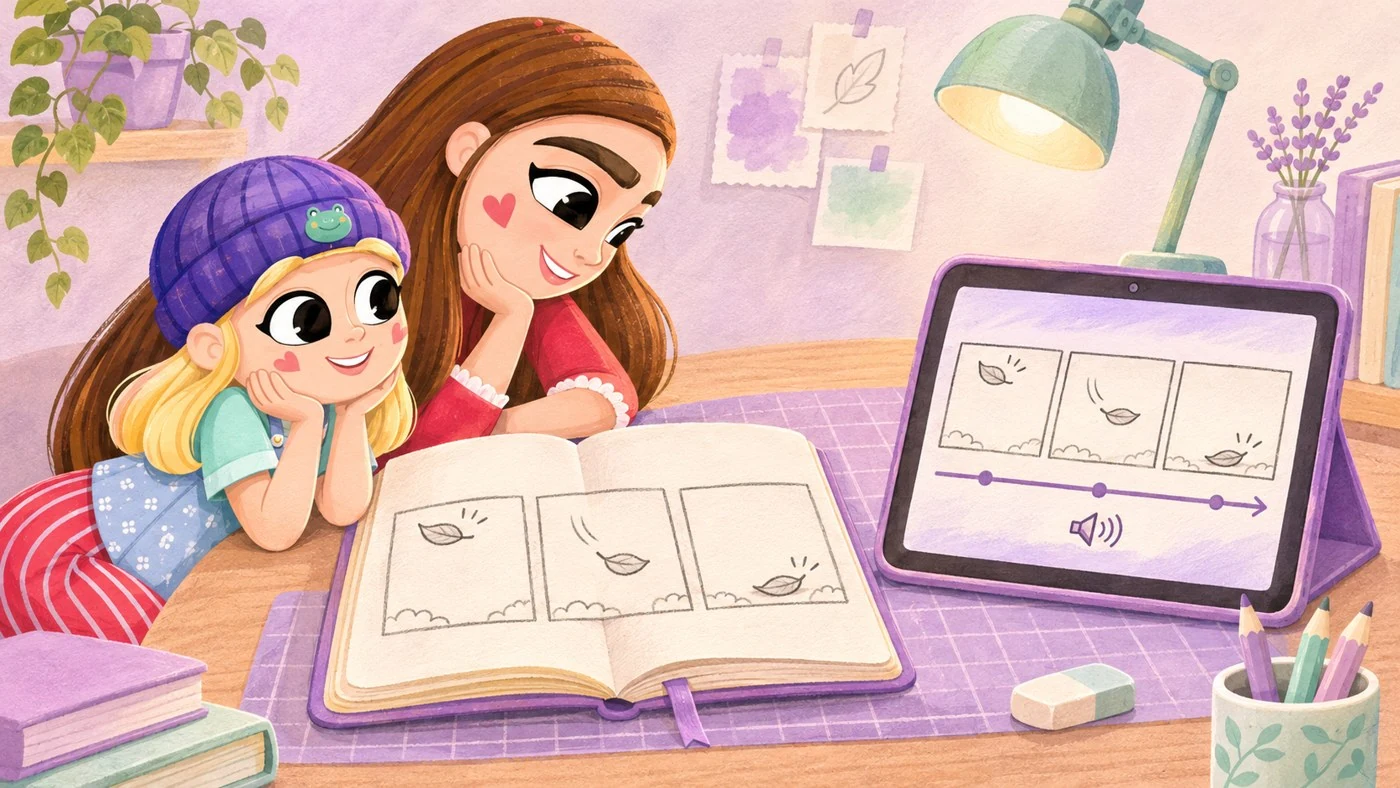
What is an animatic? Storyboard pictures played in time
An animatic is a working sequence in which storyboard pictures play for chosen lengths of time. It may include…
A playdate at home: agree which toys are for sharing
Before a playdate at home, agree which toys will be available and which personal things your child wants to pu…
What is a storyboard? One finished picture is not a finished cartoon
A storyboard is a visual plan of shots. It shows what we will see, in which order and how one moment connects …
 Free